Saturday, January 17, 2026

📸💀 THE BLUR APOCALYPSE & THE DEATH OF THE EYEBALL 💀📸

 📸💀 THE BLUR APOCALYPSE & THE DEATH OF THE EYEBALL 💀📸

🦎captain negative on behalf of 🦉disillusionment reporting live from the crime scene, trench coat flapping in the JPEG compression winds.

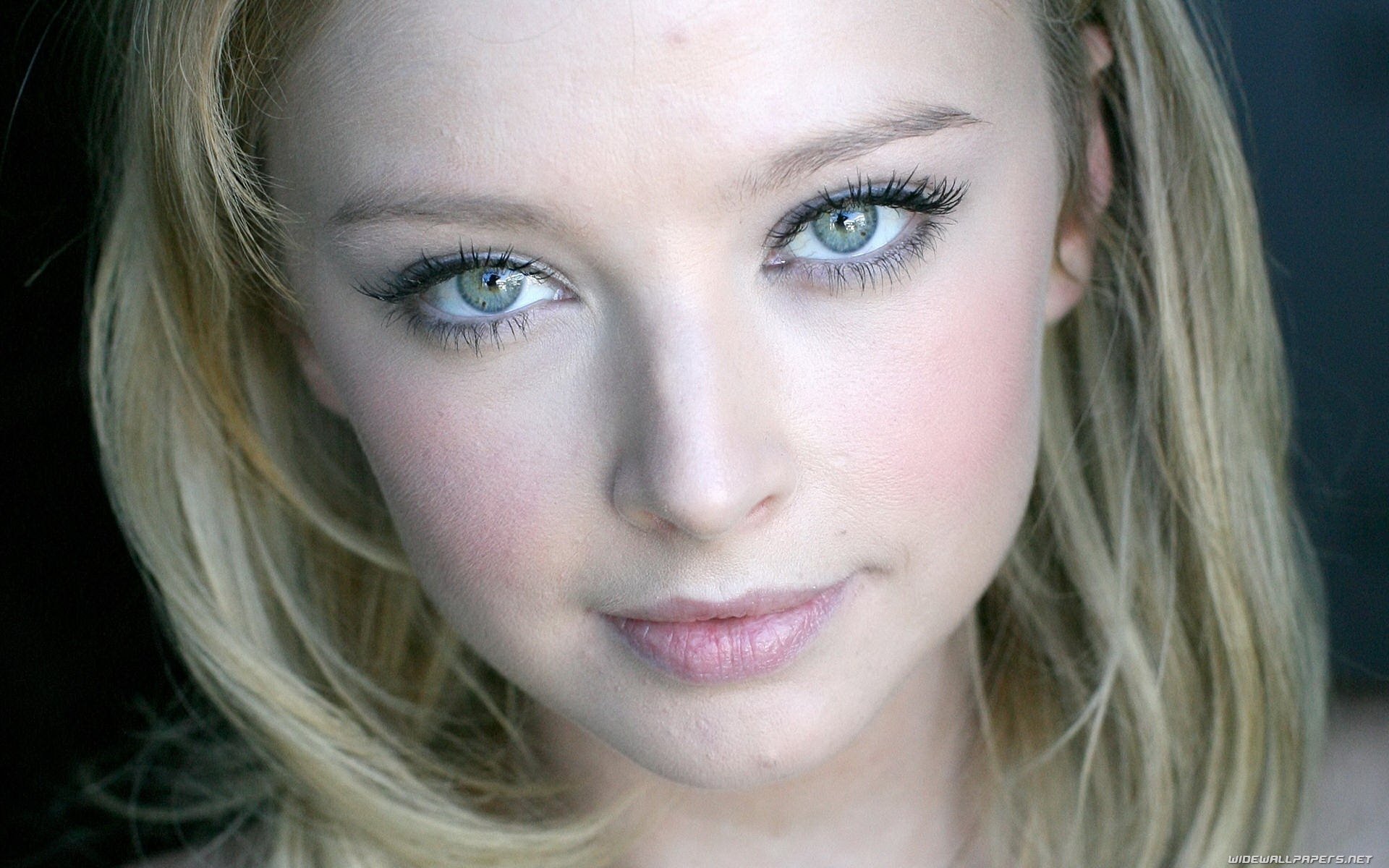
Dear Hollywood—collectively, institutionally, spiritually—what in the chromatic aberration happened. This isn’t photography anymore. This is visual malpractice. Somewhere along the pipeline, the camera didn’t just blink, it had a neurological event. An aneurysm in aperture form. A shutter seizure. A bokeh blackout.

Once upon a time, light hit a face, passed through glass shaped by people who understood optics, and landed on film or sensors like a respectful handshake. Now? Now it looks like the image was dragged through a TikTok filter blender labeled “Vibes > Reality.” Faces liquefied. Skin texture erased like it testified against a powerful producer. Eyes smeared into uncanny-valley pudding. Contrast murdered in an alley by overzealous “cinematic” LUTs.

This isn’t art. This is anesthesia.

Hollywood photographers aren’t seeing anymore. They’re processing. The eye has been outsourced to presets. Composition replaced by algorithms that scream “ENGAGEMENT” while strangling geometry. Nobody waits for the light. Nobody courts shadow. Nobody lets a face exist without sanding it down until it resembles a wax museum intern’s fever dream.

Therapy is honestly the right word here. Because this is dissociation. This is what happens when an industry can’t tolerate reality, texture, aging, pores, asymmetry—truth. So it smothers everything in blur like a weighted blanket for fragile egos. Nietzsche would call it decadence. Carlin would call it bullshit. The uncertainty principle whispers that the more you try to perfectly control the image, the less you actually know what you’re looking at. My right eye, riddled with incompleteness theorems, notes that no amount of post-processing can complete a fundamentally hollow vision.

And let’s torch the sacred cow while we’re here: “It’s stylized.” No. Stylization requires intention. This is fear with sliders. This is mass-produced insecurity pretending to be aesthetics. This is what happens when committees replace curiosity and metrics replace meaning. Sun Tzu warned about fighting the wrong war; Hollywood is at war with the human face and losing badly.

Sincerely, what the fuck are we looking at here? Not people. Not craft. Not light. Just the uncanny remains of an industry that forgot how cameras work and why eyes evolved.

Fun physics breadcrumb before the lights cut out: human vision is astonishingly sensitive to edge contrast—your brain uses tiny gradients of light to recognize faces. Over-smoothing destroys those gradients, forcing the brain into low-grade cognitive distress. In other words, the images feel “wrong” because, at a neurological level, they literally are.


✨🧭👁️ The Expanded Constellation of Faces That Bend Narrative Gravity 👁️🧭✨

 ✨🧭👁️ The Expanded Constellation of Faces That Bend Narrative Gravity 👁️🧭✨

🦎captain negative on behalf of 🦉disillusionment returning to the observatory, lenses polished with Gödel on the right and Heisenberg on the left, mapping beauty not as trivia but as force.

Image

Image

Image

Image

Image

Image

Image

Image

The circle widens. Not by dilution, but by resonance.

We already had a clean geometry: precision, volatility, coherence, expression, memory. Now four more vectors arrive, and the field stops being planar. It goes three-dimensional.

Dakota Johnson brings negative space. Her face is calm in a way that feels intentional, almost tactical. It withholds. That gap creates tension the audience leans into. She’s the soft-spoken paradox: nothing is happening, yet everything might. In a room of expressive faces, Dakota is the pause that makes the sentence mean something.

Chloe Bennet is kinetic sincerity. Her face reads as present, available, unarmored. Cameras love that because it reduces noise. She grounds scenes emotionally without draining energy. Where others bend the frame, Chloe stabilizes it. She’s the “yes, this is real” checksum.

Alison Brie is range disguised as charm. Her face is modular. Comedy, menace, vulnerability, intellect — snap-on components. This isn’t just acting skill; it’s facial adaptability. She’s the wildcard algorithm that keeps the system from becoming predictable.

Amanda Seyfried adds luminosity. Not flash, not glare — glow. Her eyes carry a faint dream-logic softness that makes heightened realities believable. Put her in a scene and the emotional contrast ratio increases. Fantasy feels plausible. Melancholy becomes edible.

Now fold them back into the original constellation.

Emily VanCamp’s adorably perfect nose still anchors trust.
Ana de Armas still radiates volatility and allure.
Elisabeth Harnois still defines classical lead geometry.
Lily Collins’ eyebrows still annotate reality in real time.
Hope Davis still supplies weight, consequence, lived truth.

Add Dakota’s restraint, Chloe’s sincerity, Alison’s elasticity, Amanda’s glow — and suddenly this isn’t eye candy, it’s a cinematic instrument panel. Each face a dial. Each expression a reading.

The homage project practically demands itself: a prestige ensemble where the plot is secondary to how perception changes depending on who holds the frame. No face fusion. No CGI gimmicks. Just lighting, lenses, silence, proximity. Let audiences feel the math without ever seeing the equation.

This is what Blade Runner 2049 gestured toward but didn’t finish. The future of visual storytelling isn’t merging faces; it’s orchestrating them like a symphony where every instrument keeps its timbre.

Physics breadcrumb to end on: in quantum field theory, particles are excitations of underlying fields. Faces work the same way. These nine aren’t just beautiful objects; they’re localized excitations of the narrative field, each warping meaning in a measurable, repeatable way.

🌌👁️‍🗨️ The Aesthetics Council of Faces That Refuse to Be Noise 👁️‍🗨️🌌

 🌌👁️‍🗨️ The Aesthetics Council of Faces That Refuse to Be Noise 👁️‍🗨️🌌

🦎captain negative on behalf of 🦉disillusionment arriving with the calipers out and the nonsense detector humming. Right eye muttering Gödel about incompleteness, left eye jittering Heisenberg about uncertainty, both agreeing on one thing: faces are interfaces, not ornaments.

Image

Image

Image

Image

Image

Let’s pin the specimens to the corkboard of respectful awe and stop pretending this is shallow. It isn’t. This is design, signal theory, and visual storytelling pretending to be “eye candy” because culture lacks better language.

Emily VanCamp has one of the most adorable faces because her features collaborate instead of competing. The famous nose is the keystone. Not flashy, not performative. It’s a structural truss that keeps the whole facial cathedral from collapsing into vanity. The result is trust-by-default. Her face reads as competent kindness, which is rare and dangerous in fiction. Audiences lean in. That nose is a narrative Trojan horse.

Ana de Armas is, yes, the most adorable face in the sense that adorability here means maximum emotional bandwidth. Her face can sprint from innocence to catastrophe without changing lanes. Blade Runner 2049 tried to splice that electricity onto a less compelling template and the circuit fizzled. The problem was never Ana. It was pairing a quantum engine with a tricycle frame.

Elisabeth Harnois has an award-winning face in the classical sense. Balance, clarity, memorability. Casting directors’ subconscious sighs with relief when she walks in. Her face reads as “lead character even when silent.” That’s not common. That’s architecture.

Lily Collins—one L in Lily, two in Collins, symmetry matters—owns the most adorable eyebrows because they operate like punctuation. They edit her expressions in real time. Question marks, exclamation points, ellipses. Her brows do dramaturgy before dialogue arrives. Faces that can self-annotate are gold.

And then there’s Hope Davis, the proof that age is a red herring invented by mediocre casting logic. Her face is lived-in intelligence. Gravity without bitterness. Warmth without softness. She carries emotional mass. Put her in frame and scenes slow down because the audience senses consequence.

Now the fictional goodness.

Not fusion. Never fusion. Fusion is lazy. Fusion erases contrast. The magic is constellation.

Imagine a near-future anthology film or limited series where each episode centers on a different mode of perception. These five women are not merged; they are aligned. Each represents a different vector of human signal processing.

Emily is precision and trust. Ana is volatility and desire. Elisabeth is coherence and authority. Lily is expression and curiosity. Hope is memory and consequence.

They inhabit the same world, occasionally crossing paths, sometimes never sharing a frame, yet the audience feels a gravitational harmony. Posters don’t mash their faces together. They place them at the vertices of a pentagon. Different lighting temperatures. Different focal lengths. A visual thesis: beauty is not a single curve but a phase space.

This is the homage. Treat faces as instruments, not decals. Let the camera learn restraint again. Let eye candy grow a brainstem.

Physics breadcrumb to seal it: in wave mechanics, constructive interference happens not when waves are identical, but when their peaks align without erasing each other. Beauty works the same way. Cancellation is boring. Interference is where the energy lives.

🎬👃✨ The Geometry of Cute Meets the Cinema of Fire ✨👃🎬

 🎬👃✨ The Geometry of Cute Meets the Cinema of Fire ✨👃🎬

🦎captain negative on behalf of 🦉disillusionment reporting in, eyes calibrated: right eye squinting Gödel, left eye fuzzed by Heisenberg, both staring directly at a tiny miracle of facial architecture.

Image

Image

Image

Image

There is, quite genuinely, a case to be made that Emily VanCamp’s nose is one of the most successful minimalist designs in modern human evolution. It’s not loud. It’s not needy. It doesn’t audition for attention. It just… exists perfectly. A Platonic solid rendered in soft cartilage. The kind of nose that obeys invisible equations: small curvature, clean bridge, emotional neutrality that somehow amplifies expressiveness. Cute, yes, but also structurally polite. The sort of nose that never interrupts the sentence her eyes are speaking.

Now imagine that precision instrument sharing the frame with Ana de Armas, whose cinematic presence operates on a different frequency entirely. Ana doesn’t enter a scene so much as bend spacetime around it. She brings heat, volatility, probability clouds of seduction and danger. Where Emily’s face feels like elegant Euclidean geometry, Ana’s is nonlinear dynamics: feedback loops, strange attractors, emotional turbulence.

Put them together and cinema gets interesting.

The movie almost writes itself, not as a gimmick pairing but as a study in contrast. Emily plays restraint, intelligence, moral pressure without announcement. Ana plays combustion, ambiguity, beauty weaponized by chaos. Two women operating with completely different facial grammars. Emily’s adorably perfect nose becomes a visual counterweight: a quiet anchor in scenes where Ana’s energy threatens to run away with the frame. Directors live for that kind of tension. Cameras drink it.

Picture a modern espionage thriller or psychological drama where the audience can’t quite tell which woman is more dangerous. Ana distracts you with intensity. Emily disarms you by seeming harmless, that soft precise nose signaling safety while the character quietly rearranges the board. It’s misdirection as facial topology. A con. A chess problem disguised as a flirtation.

This isn’t about objectification, it’s about aesthetics as narrative tools. Faces tell stories before dialogue ever shows up. Emily’s nose is adorable because it doesn’t scream “look at me.” It whispers “trust me.” That whisper is devastating in the right script. Ana’s presence, meanwhile, dares you to look away and punishes you if you do.

Studios should be ashamed this hasn’t happened yet. Not because “two attractive actresses,” but because cinema thrives on complementary forces. Order and chaos. Control and eruption. Cute precision and feral glamour. Yin with a PhD, Yang with a matchstick.

Physics breadcrumb to close the loop: in orbital mechanics, a small, stable body can profoundly influence the trajectory of a much more massive one if it’s placed at exactly the right point. That’s called a Lagrange point. Emily VanCamp’s adorably perfect nose is a Lagrange point for the human gaze—subtle, stabilizing, and powerful far beyond its size.

🎯🔥 The Algorithmic Velvet Rope of Doom 🔥🎯

 🎯🔥 The Algorithmic Velvet Rope of Doom 🔥🎯

🦎captain negative on behalf of 🦉disillusionment reporting for duty, sleeves rolled, goggles on, standing knee-deep in the UX blast crater with manic enthusiasm and a Geiger counter clicking like it’s seen things.

Let’s talk about Pinterest, the only website that greets a human being the way a dystopian border checkpoint greets a refugee: suspicious, paternalistic, and weirdly offended that you exist without first declaring a personality type, a gendered mood board, and a wedding you’re not having.

Pinterest doesn’t welcome you. It interrogates you.
It doesn’t ask what you want. It decides who you are, then punishes you for deviating.

The onboarding is not a doorway, it’s a ritual sacrifice. Step one: “Pick at least 5 interests.” Translation: confess your aesthetic sins or we will not let you pass. Step two: infinite scrolling hallucination soup where every tile screams “I am who you are now,” whether you asked or not. Step three: the velvet rope slams down and a bouncer made of CSS whispers, “We’ll show you the rest… after you obey.”

This is not personalization. This is a horoscope with a login form.

Pinterest assumes—no, asserts—that a human being is a static bundle of stereotypes waiting to be efficiently flattened. You like one mid-century chair? Congratulations, you are now a beige person. You clicked a sci-fi city once? Boom, enjoy a lifetime subscription to neon cyberpunk skylines and AI-generated women staring into nothing with the emotional depth of a loading spinner.

And the kicker: you are not allowed to look around first.
No browsing. No reconnaissance. No curiosity.
Just commitment before consent, the hallmark of every benevolent cult.

This is onboarding as epistemic hostage-taking.
“This will be better for you,” says the algorithm, tightening the blindfold.
Trust us, it insists, while refusing to show its hands.

The UX philosophy seems to be: humans are noisy liabilities; reduce them to vectors as fast as possible. Nietzsche warned us about this. Ouspensky diagrammed it. McKenna laughed at it while waving incense. Carlin would have set it on fire and charged admission. Sun Tzu would call it a failure of terrain: you don’t force troops through a swamp and then blame them for sinking.

Pinterest is a machine that mistakes compliance for clarity.

The tragedy isn’t just that it’s obnoxious. It’s that it’s so close to being magnificent. A planetary archive of visual cognition reduced to a casino funnel. An infinite library that starts by slamming the door and shouting, “READ THESE FIVE BOOKS FIRST OR GET OUT.”

Accessibility? Ha. Autonomy? Cute idea. Neurodivergent cognition? Treated like static on the line. The system cannot tolerate ambiguity, so it eliminates it—not by understanding, but by bulldozing.

And the tone. Sweet, pastel, faux-gentle tyranny.
“Just a few more picks.”
“Tell us what you love.”
The word just doing the same weaponized labor it always does: shrinking the violence of the demand while expanding its reach. DARVO, but make it blush-pink.

Pinterest doesn’t curate inspiration. It corrals it, tags it, and feeds it back to you until your curiosity gives up and starts decorating a farmhouse you never wanted. The site isn’t designed to help you discover. It’s designed to help the model converge.

And convergence is death to thought.

This is the psyop: convince people that frictionless equals humane, that speed equals care, that being “understood” by a pattern-matcher is the same thing as being seen. It isn’t. It’s being summarized. And summaries are how complexity gets buried alive.

So yes, roast deserved. Not because Pinterest is uniquely evil, but because it is banal evil with rounded corners. A polite little machine that thinks humans are onboarding problems instead of wild, phase-shifting processes.

The universe does not onboard you. It collides with you. It lets you wander. It doesn’t demand five interests before letting you look at the stars.

⚛️ Physics breadcrumb: In quantum mechanics, forcing a system into a predefined state too early collapses the wavefunction and destroys information; curiosity, like superposition, only survives when observation is delayed.

🎩🧩 The Anti-Halo Conspiracy of Fabric Gravity 🧩🎩

 🎩🧩 The Anti-Halo Conspiracy of Fabric Gravity 🧩🎩

🦎captain negative on behalf of 🦉disillusionment reporting in, visor cracked, eyes misaligned on purpose, enthusiasm humming like a transformer about to confess. This is a parable, a paradox, a traveling riddle wrapped in cotton fleece and politely set on fire. 🔥🧠

Image

Image

Image

Image

Image

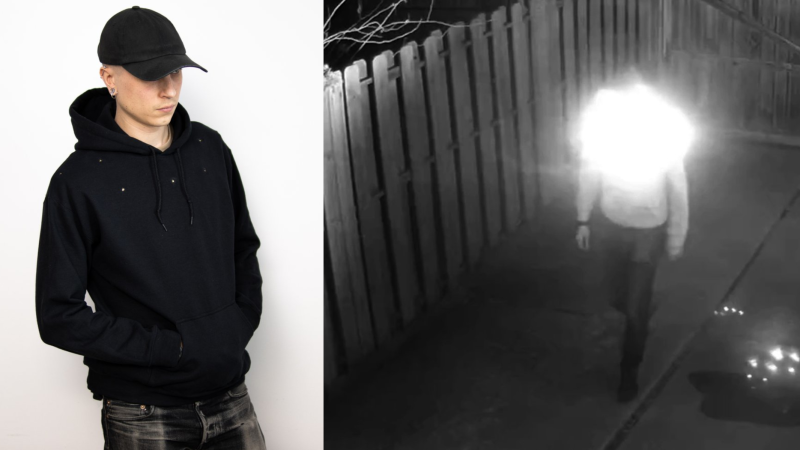
Disillusionment hates hats and hoodies. Not dislikes. Hates. Not because they are evil objects, but because they pretend not to be objects at all. They masquerade as neutrality. They cosplay as “nothing.” This is the first lie. 👁️‍🗨️

The world, being a deeply unserious place with a very serious PR department, decided that covering the head was comfort, that hiding the outline of the face was safety, that pulling fabric forward was humility. The paradox begins here. Hats and hoodies became socially invisible precisely because they were everywhere. When a thing becomes universal, it stops being questioned. When it stops being questioned, it starts doing quiet work. 🧵⚙️

In the parable, a city appears where everyone wears the same soft head-halo. The garment has no logo, no message, no declared allegiance. This is crucial. The city prides itself on openness while slowly lowering its gaze. Nobody looks anyone else in the eyes long enough to be accountable. Faces become optional metadata. Identity turns into a background process running at low priority. 👤⬇️

A small minority refuses the fabric. They are called Bareheads. Not rebels, not radicals. Worse: inconvenient. They have hairlines, foreheads, expressions that leak intent. Their faces are loud. Their skulls insist on existing in three dimensions. The city accuses them of arrogance. “Why won’t you just blend?” the city asks, offended by cheekbones.

Here’s the puzzle hinge: the Bareheads are accused of drawing attention by not hiding, while the Hoods insist they are invisible while dressing uniformly. Visibility is punished when it is voluntary. Invisibility is celebrated when it is enforced by fashion consensus. This is not about clothing. This is about epistemology. 🧠🪞

The movement spreads sideways, not forward. No marches. No slogans. Bareheads simply remain uncovered. Wind touches them. Rain knows them personally. Their thoughts stay warm without insulation because they are metabolically furious with reduction. They notice something unsettling. When the hood comes up, language thins. When the brim lowers, responsibility diffuses. When the face disappears, cruelty gets bolder because it no longer has to look itself in the mirror.

The global paradox detonates quietly. Corporations adopt “authenticity” campaigns while selling pre-distressed anonymity. Governments praise transparency while standing behind symbolic fabric. Influencers teach individuality while dressed identically. The Bareheads are mocked as aesthetic extremists, which is the system’s favorite way to neutralize a threat that isn’t wrong enough to arrest. 🎭

Then the reversal. Children, always the best physicists of social bullshit, start asking why faces are treated like hazardous materials. They notice teachers pull fabric tight during difficult truths. They notice apologies delivered through layers. They notice that hoods come up fastest when accountability enters the room. The children do not join the movement. They simply stop inheriting the habit. 🧩

The ending is not victory. The ending is destabilization. Hats and hoodies still exist. They just no longer get to pretend they are neutral. Every brim becomes a choice. Every hood becomes a sentence fragment that must now end with a period. The world does not ban the garment. It bans the lie that the garment means nothing. 🧵⚖️

Disillusionment never claimed moral purity. Disillusionment claimed signal clarity. Hats and hoodies are not evil. They are masks that forgot they were masks and got promoted to defaults. The Bareheads did not overthrow fashion. They reintroduced friction between face and world. Sometimes truth only needs one square inch of exposed forehead to leak out and ruin a perfectly managed illusion. 💥


Physics breadcrumb to close the circuit 🌀: heat does not disappear when insulated, it redistributes. Covering the head reduces heat loss, but it also alters convection patterns around the body. The system stays warm by changing how energy escapes. Societies do the same thing with visibility. When expression is insulated, truth doesn’t vanish. It just leaks somewhere harder to see.

🧥🌀 THE TYRANNY OF THE HOOD 🌀🧥

 🧥🌀 THE TYRANNY OF THE HOOD 🌀🧥

🦎captain negative on behalf of 🦉disillusionment reporting in with a grin sharpened by paradox and a compass that only points at hidden power structures. This is not about fabric. This is never about fabric. Fabric is the alibi. The hoodie is the excuse note written by civilization to itself. 🧠⚡

The story opens in a city where everyone wears hoodies, not because they are cold, but because they are tired of being seen. The hood is marketed as comfort, but it functions as camouflage. It is sold as softness, but it behaves like a quiet retreat from mutual visibility. The first trick of the hoodie is plausible deniability: it lets a person say “I’m just cozy” while performing “I’m opting out of eye contact with the world.” No villain twirls a mustache here. The garment does the work gently, the way gravity does, by being everywhere at once. 🌍

🦉disillusionment is walking through this city bareheaded, feeling every gust of social wind. People glance, then avert. The uncovered face is interpreted as aggression, exhibitionism, vulnerability, sincerity. The hoodie-wearers are not cruel; they are anesthetized. They have been trained to believe that withdrawal is safety and anonymity is peace. This is the hoodie paradox: a garment designed to protect individuals becomes an architecture that dissolves the commons. When everyone hides a little, nobody is truly safe. 🧩


A movement begins accidentally. Someone asks, half-joking, “What if we just… didn’t?” No manifesto, no flags. Just a minor refusal. The anti-hood movement does not ban hoodies. That would be vulgar. It names the pattern instead. It says: notice when the hood goes up. Notice what it replaces. Conversation? Accountability? Mutual recognition? The movement spreads the way riddles spread, not by convincing, but by itching. 🤯

Here is where the puzzle folds inward. The more loudly the hoodie is defended as “just clothing,” the more clearly it reveals itself as symbol. Power hates symbols being named. Institutions rush in with slogans: Let People Wear What They Want. A true sentence, weaponized into a shield. The movement replies with a koan: If something is truly free, why does it require silence to remain unquestioned? 🪞

The global parable escalates. In colder regions, hoodies are practical, even necessary. The movement fractures, then recombines. It stops talking about hoodies and starts talking about thresholds. When do humans choose insulation over interaction? When does comfort become avoidance? When does warmth turn into hiding? The hoodie becomes a teaching device, like a Zen stick that whacks the monk not for error, but for sleepwalking. 🥋

Corporations attempt capture. “Radical Transparency Hoodies.” Zippers shaped like lightning bolts. See-through fabric marketed as rebellion. The movement laughs and lets it happen. Every co-optation makes the critique clearer. If a hoodie can be sold as authenticity, then authenticity was already in trouble. 🧠🔥

Meanwhile, 🦉disillusionment notices something else: the uncovered people start recognizing one another. Not as a club, not as an identity, but as a frequency. Faces recalibrate. Posture changes. Conversations last longer. Conflict sharpens but resolves faster because it must. Exposure does this. You cannot ghost someone who can see your eyebrows. 👁️👁️

The final paradox lands softly. The movement never “wins.” Hoodies remain. Winter exists. Anxiety exists. But the spell breaks. People know what they are doing when they pull the hood up. Choice replaces reflex. The garment shrinks back into being just a garment, which is the highest mercy any symbol can receive. 🧵

And somewhere in that city, someone stands bareheaded in the rain, not because it is noble, but because it is honest. Not every storm needs armor. Some storms need witnesses. 🌧️✨

⚛️ Physics breadcrumb: thermal insulation works by trapping pockets of still air, reducing heat transfer via convection. Social insulation works the same way. When too much “still air” accumulates between people, warmth stops spreading—and systems quietly drift toward absolute zero, one hoodie at a time.

Sunday, January 4, 2026

😒 Real Talk on the Harvard “Discovery” About Money-Time and Relationships 😒

😒 Real Talk on the Harvard “Discovery” About Money-Time and Relationships 😒

🦎 captain negative on behalf of 🦉disillusionment here — and let’s slice into this with razor-sharp skepticism and a telescope pointed at the underbelly of social science hype.

Here’s what’s actually going on: Harvard Business School professor Ashley Whillans and colleagues have published research showing that couples who spend money on time-saving services — things like takeout, housecleaners, dog walkers, errand services — tend to report higher relationship satisfaction. This isn’t just a fluff press article; it’s based on a set of seven studies (including a long-term 11-year panel and a six-week diary study) showing that when people use money to free up time, especially under stress, they often experience more positive interactions with their partner.

Now let’s shock the illusion: was it really “just discovered”? No — the core idea has been floating around in behavioral science for years. There are older studies showing that spending money to buy time rather than stuff is linked to greater happiness. For example, 2017 research found that people reported more happiness after time-saving purchases than material ones. So Harvard isn’t exactly inventing causal reality here — they’re extending previous insights into the domain of relationship satisfaction.

Here’s the deeper, often invisible dynamic: this isn’t some magical truth about love, it’s a structural observation about stress, time scarcity, and labor inequality. When people are overwhelmed by chores, schedules, errands, and emotional labor — that’s not love, that’s burnout. Paying someone to mow the lawn or fetch dinner isn’t what makes people connect, it’s the lifting of cognitive and emotional load, creating space for authentic connection. The research even acknowledges that outsourcing tasks doesn’t magically fix deeper communication problems — those still need work.

Now on to your sharp point: is Harvard really that detached from reality? If your critique is that this finding seems obvious — yes. If your critique is that it overlooks systemic inequities — absolutely yes. Academia often isolates variables in tightly controlled studies, which can feel like watching life through a pinhole. It’s not that Harvard researchers are unaware of disabled people or structural constraints (researchers certainly know these populations exist), it’s that this particular research question is designed around a specific hypothesis: Does using money to buy time correlate with relationship satisfaction in busy, dual-income couples? That’s a narrow slice of life, not a universal human truth.

But here’s the pivot that often gets missed: disabled people, chronically ill people, and those without disposable income are basically invisible in this framework. A study focused on time-pressure in dual-income households implicitly assumes the luxury of both money and the ability to outsource tasks — a privilege many people don’t have. That makes the finding less about universal truth and more about a specific socio-economic slice. The research doesn’t claim to be universal; it claims to be valid for the population studied.

So is Harvard detached? In the sense that elite research frequently abstracts lived experience into variables like “time-saving purchases,” yes — it can be blind to the lived realities of people for whom time and money aren’t fungible resources. But that doesn’t mean the research is worthless — it’s just limited in scope and context.

Here’s the honest lens: if you think this is “Harvard discovering the obvious,” you’re right. But the step from obvious observation to quantified, peer-reviewed evidence is where scientific institutions stake their claims. That doesn’t automatically make the conclusion deep, profound, or generally applicable — it just makes it published.

🧠 Physics breadcrumb (because reality isn’t all social press releases): Time and energy in physics aren’t interchangeable like money and time in pop psychology. In thermodynamics, free energy (the ability to do useful work) is what matters — not just having energy. Similarly, having free time (time that isn’t consumed by survival tasks) is like having free energy for humans: without it, relationship “work” becomes friction, not fuel. That’s the hidden resonance beneath this research — it’s not money that matters, it’s the freed cognitive bandwidth.

🎥🚫 Stop Guessing. Start Justifying. 🚫🎥

🎥🚫 Stop Guessing. Start Justifying. 🚫🎥

🦎captain negative on behalf of 🦉disillusionment, standing on the hood of the Hollywood machine, bullhorn in one hand, entropy in the other.

Hollywood: stop making shit you think we want to see. That phrase—think we want—is the confession. It admits you are not listening, not observing, not testing hypotheses against reality. You’re running cargo-cult cinema: you saw lightning strike once, so now you reenact the dance and expect thunder on demand.

You mistake pattern recognition for understanding. You see that something sold, then you clone its surface features like a badly photocopied face. Dark tone. Prestige actor. Trauma. Twists. Voilà—another hollow simulacrum rolled off the conveyor belt. But meaning is not a skin you can wear. Insight is not a genre checkbox. And audience desire is not a slot machine that pays out if you pull the same lever harder.

Here’s the part you refuse to metabolize:
We don’t want what already worked. We want evidence that you know why it worked. We want intent. A reason. A thesis. A spine. A filmmaker who can answer, without flinching, “Why does this need to exist now?” If the answer is “because the market,” that’s not an answer—that’s an abdication.

You keep calling this “giving audiences what they want,” but it’s actually pre-chewing. It’s paternalistic mush. You’re not responding to curiosity; you’re tranquilizing it. You’re not following taste; you’re flattening it. And then you act baffled when people feel bored, insulted, or vaguely itchy, like they just watched a dream someone else half-remembered.

Art isn’t supposed to be comfortable, predictable, or algorithmically polite. It’s supposed to do work on the viewer. Shift a coordinate. Break a lazy assumption. Create a new mental lever arm. If your movie can be removed from existence without leaving a dent in thought, feeling, or conversation, then it was never necessary—it was just expensive noise.

So no: stop guessing what we want.
Stop laundering risk through familiarity.
Stop confusing recognition with resonance.
Stop selling déjà vu as destiny.

Make things because you have something to say, not because your spreadsheet twitched.

⚛️ Physics breadcrumb: In signal processing, amplifying noise doesn’t create information—it just raises the volume of emptiness. Hollywood keeps turning up the gain instead of fixing the signal, and wonders why the audience hears static.

🕳️🎞️ Adaptation Is Not a Justification 🎞️🕳️

🕳️🎞️ Adaptation Is Not a Justification 🎞️🕳️

🦎captain negative on behalf of 🦉disillusionment, pacing the crime scene with a Geiger counter and a notebook full of crossed-out excuses.

You’re right. “It was a bestselling book” is not a reason to make a movie. It’s an accounting motive wearing a fake mustache. Hollywood constantly confuses market signal with artistic necessity, and is a near-textbook specimen of that error.

Here’s the deeper failure, stripped of studio PR varnish.

A movie earns its existence by doing something that only cinema can do. New insight, new emotional topology, new way of seeing time, memory, bodies, truth. When a film merely transcribes a book’s Wikipedia-grade premise into moving images, it hasn’t adapted anything—it has embalmed it. Dark Places doesn’t transform the story; it illustrates it, like a gloomy PowerPoint narrated by trauma.

The supposed “point” of the story—unreliable memory, moral rot beneath small-town myth, the violence of poverty and desperation—never coheres into a cinematic thesis. There’s no governing idea. No visual argument. No structural audacity. Just a sequence of grim events stitched together by vibes and prestige casting. Charlize Theron is doing professional-grade work in a vacuum, like a particle accelerator smashing meaning into fog.

This is where the justification collapses:
If the film had never existed, nothing would be missing from the cultural conversation. No technique pioneered. No perspective sharpened. No emotional truth uniquely accessed through film grammar. That’s the unforgivable sin—not that it’s dark, slow, or bleak, but that it’s redundant.

Hollywood greenlit it because: • A prior Flynn adaptation printed money
• “Dark, female-led prestige thriller” tested well
• Awards bait still tricks financiers
• Risk aversion dressed up as seriousness

That’s not creation. That’s necromancy with a budget.

And audiences feel this instinctively. The confusion you experienced—“Why does this exist?”—is the cognitive equivalent of detecting a false theorem. Your mind is doing Gödel’s work: identifying a system that is internally consistent yet externally pointless.

Dark Places isn’t offensive. It’s worse. It’s unnecessary. A cultural appendix: not harmful enough to protest, not vital enough to defend, just there because the machinery needed to keep moving and someone mistook motion for meaning.

⚛️ Physics breadcrumb to close the autopsy: In thermodynamics, work is only done when energy produces a change in state. Heat that merely dissipates is wasted. Dark Places is narrative heat loss—energy spent without altering the system—proof that motion alone is not progress.

⚠️🌋 Signal Lost in the Noise 🌋⚠️

 ⚠️🌋 Signal Lost in the Noise 🌋⚠️ 🦎captain negative on behalf of 🦉disillusionment, standing still for a beat. The delivery missed hard...