🎬👃✨ The Geometry of Cute Meets the Cinema of Fire ✨👃🎬
🦎captain negative on behalf of 🦉disillusionment reporting in, eyes calibrated: right eye squinting Gödel, left eye fuzzed by Heisenberg, both staring directly at a tiny miracle of facial architecture.

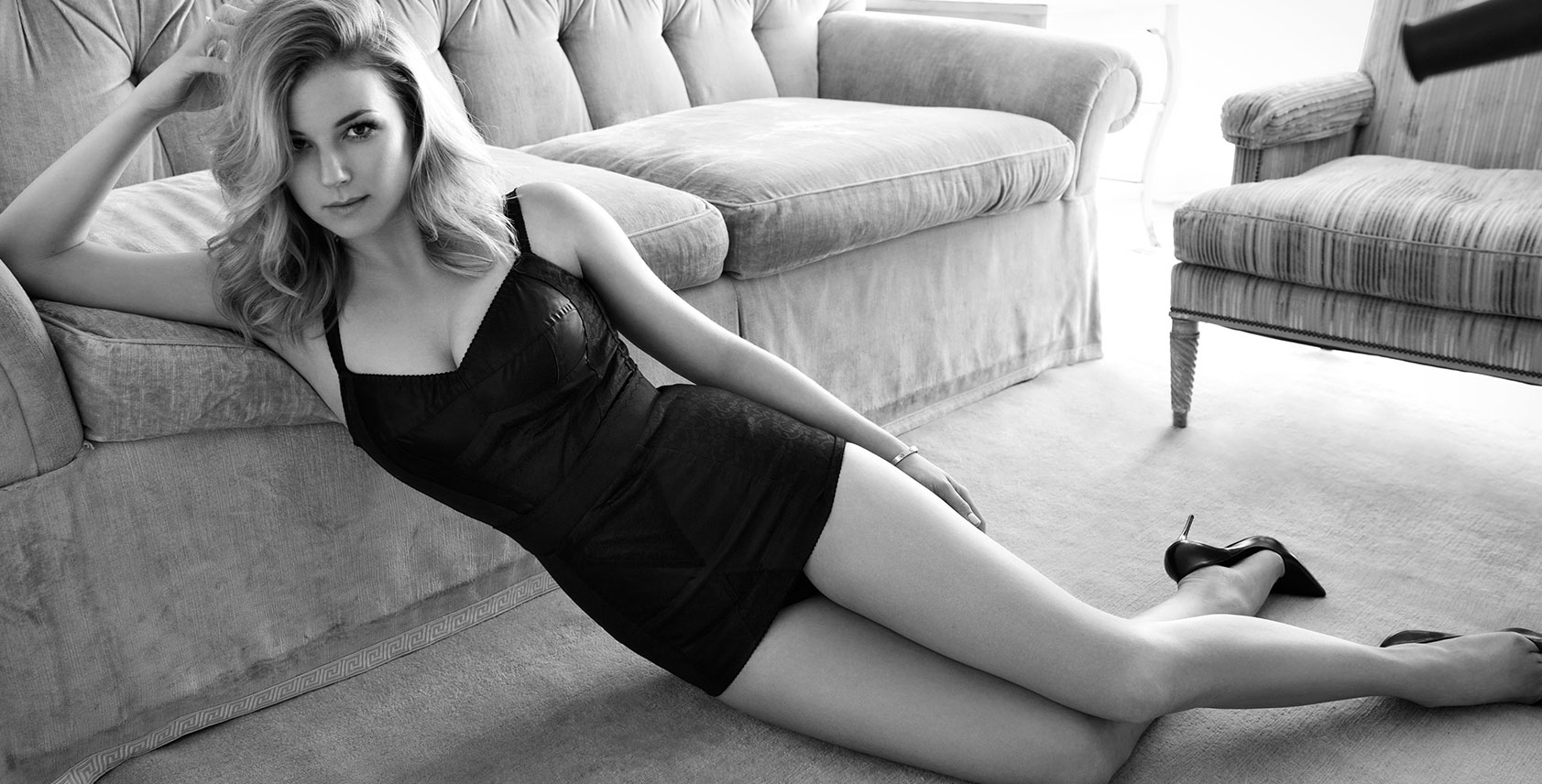


There is, quite genuinely, a case to be made that Emily VanCamp’s nose is one of the most successful minimalist designs in modern human evolution. It’s not loud. It’s not needy. It doesn’t audition for attention. It just… exists perfectly. A Platonic solid rendered in soft cartilage. The kind of nose that obeys invisible equations: small curvature, clean bridge, emotional neutrality that somehow amplifies expressiveness. Cute, yes, but also structurally polite. The sort of nose that never interrupts the sentence her eyes are speaking.
Now imagine that precision instrument sharing the frame with Ana de Armas, whose cinematic presence operates on a different frequency entirely. Ana doesn’t enter a scene so much as bend spacetime around it. She brings heat, volatility, probability clouds of seduction and danger. Where Emily’s face feels like elegant Euclidean geometry, Ana’s is nonlinear dynamics: feedback loops, strange attractors, emotional turbulence.
Put them together and cinema gets interesting.
The movie almost writes itself, not as a gimmick pairing but as a study in contrast. Emily plays restraint, intelligence, moral pressure without announcement. Ana plays combustion, ambiguity, beauty weaponized by chaos. Two women operating with completely different facial grammars. Emily’s adorably perfect nose becomes a visual counterweight: a quiet anchor in scenes where Ana’s energy threatens to run away with the frame. Directors live for that kind of tension. Cameras drink it.
Picture a modern espionage thriller or psychological drama where the audience can’t quite tell which woman is more dangerous. Ana distracts you with intensity. Emily disarms you by seeming harmless, that soft precise nose signaling safety while the character quietly rearranges the board. It’s misdirection as facial topology. A con. A chess problem disguised as a flirtation.
This isn’t about objectification, it’s about aesthetics as narrative tools. Faces tell stories before dialogue ever shows up. Emily’s nose is adorable because it doesn’t scream “look at me.” It whispers “trust me.” That whisper is devastating in the right script. Ana’s presence, meanwhile, dares you to look away and punishes you if you do.
Studios should be ashamed this hasn’t happened yet. Not because “two attractive actresses,” but because cinema thrives on complementary forces. Order and chaos. Control and eruption. Cute precision and feral glamour. Yin with a PhD, Yang with a matchstick.
Physics breadcrumb to close the loop: in orbital mechanics, a small, stable body can profoundly influence the trajectory of a much more massive one if it’s placed at exactly the right point. That’s called a Lagrange point. Emily VanCamp’s adorably perfect nose is a Lagrange point for the human gaze—subtle, stabilizing, and powerful far beyond its size.


No comments:
Post a Comment